Blue Hour
A neighbourhood roaster gets ready for the retail shelf.
Blue Hour built its following one morning at a time. Moving into independent shops called for packaging that carried the same identity across every blend, with a specification its distributor could order again.
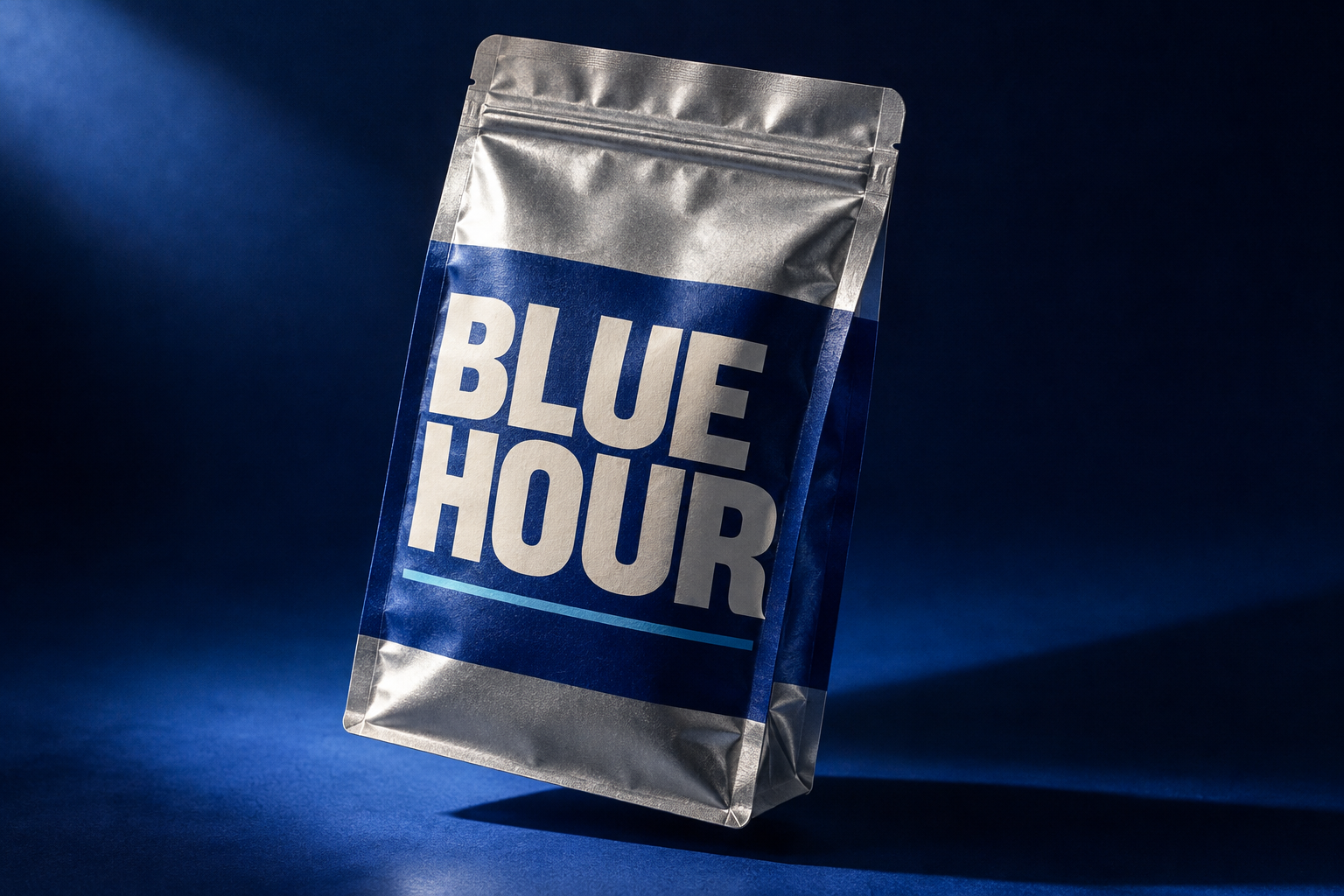
It started with the morning regulars.
Blue Hour opened in Antwerp in 2019. Its founder, Lena, roasted in small batches for the workshops and studios around her first coffee counter. Regulars began taking beans home, then buying an extra bag for someone else. What started as a café purchase became a product people looked for on other shelves.
By the time independent retailers joined the business, handwritten bags were carrying three blends and too many exceptions. Blue Hour had a new cobalt identity and a European packaging distributor ready to source the range. The assignment was to turn that artwork into a consistent pouch family, with the filling requirements, print versions and repeat orders all accounted for.
- The customer
- An independent roaster, working with its European packaging distributor.
- The packaging
- A printed pouch family for three blends, built around the roaster’s filling and storage requirements.
- The assignment
- Keep the cobalt identity unmistakable while making each blend easy to identify and the next order straightforward to specify.
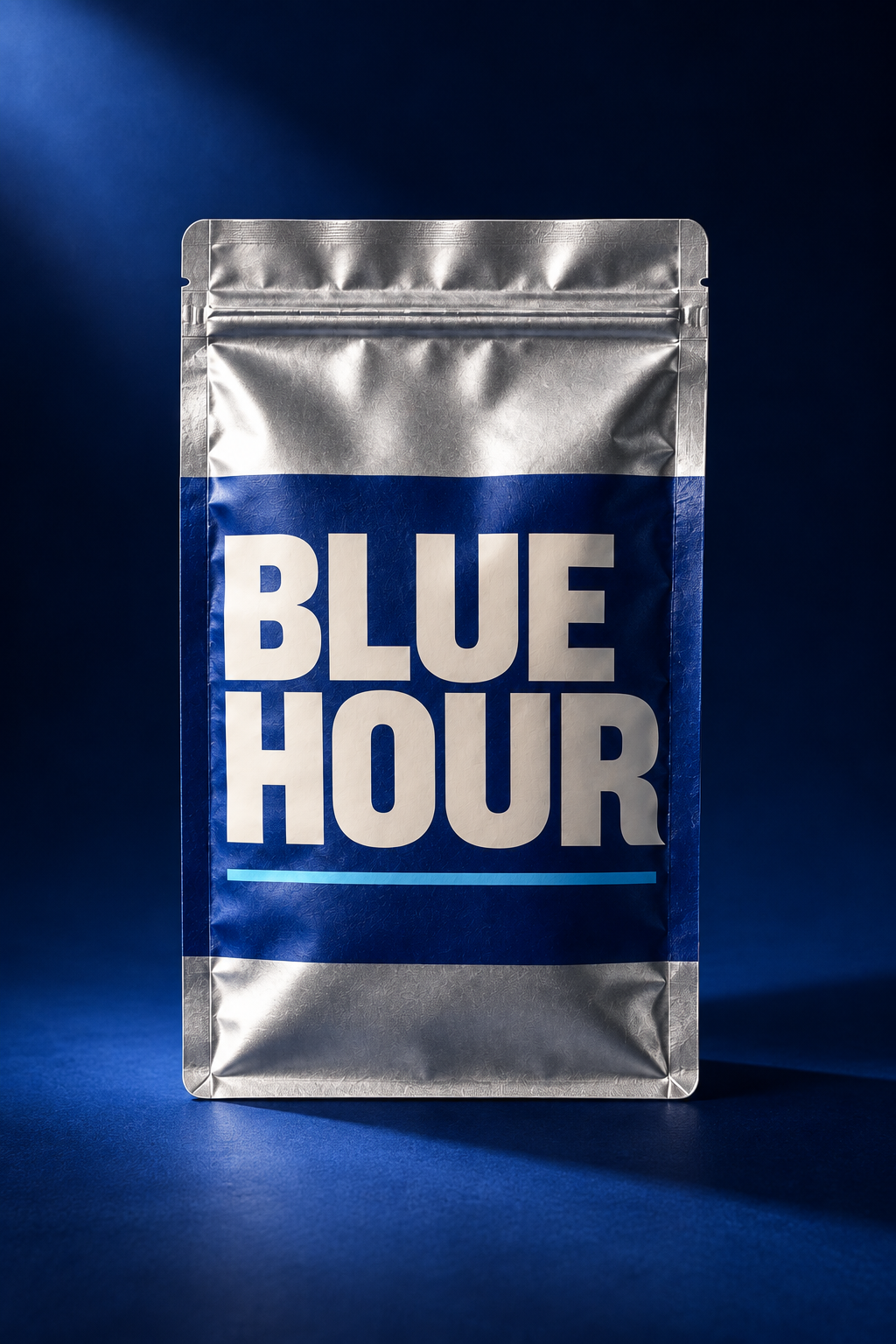
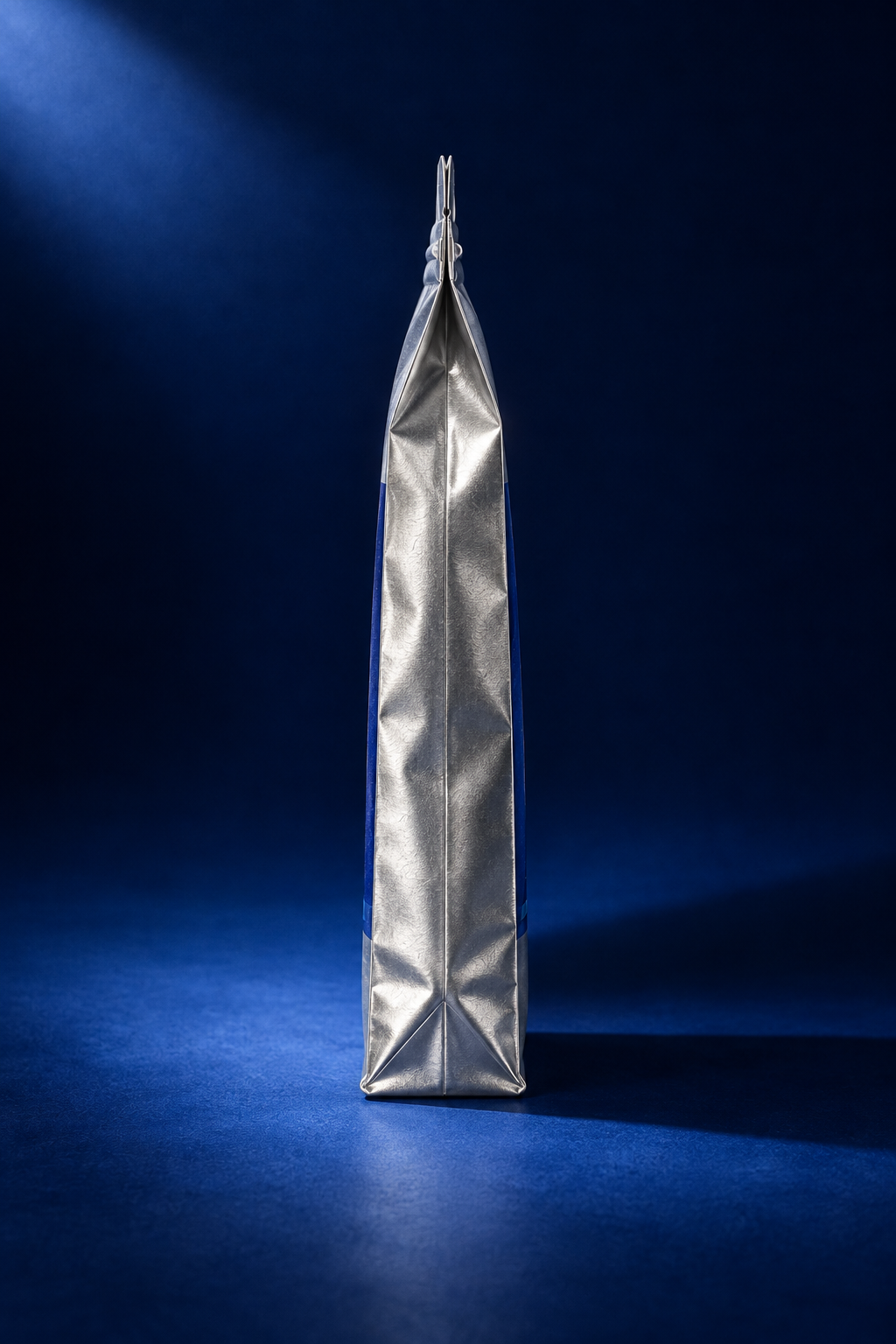
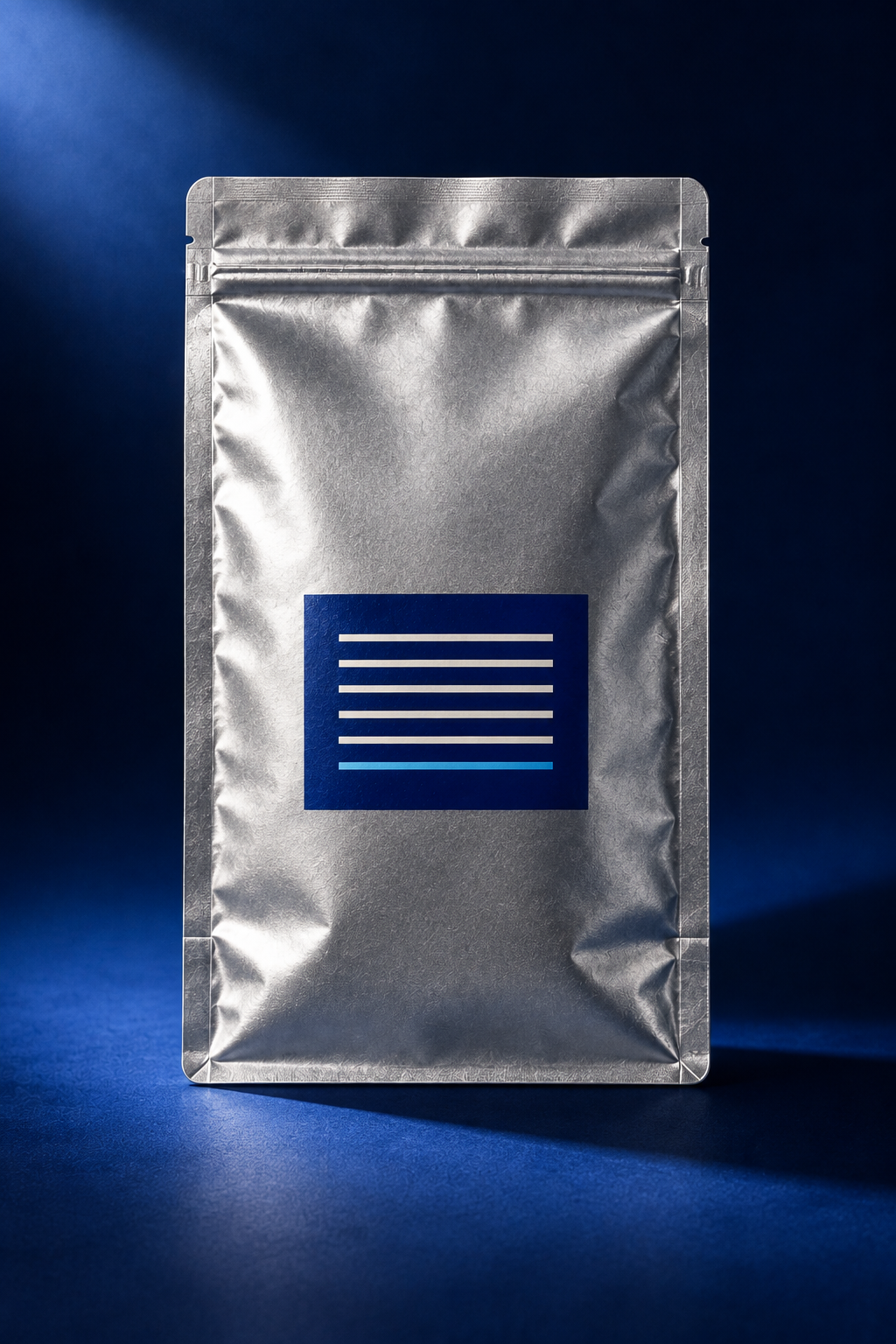

What matters in this pack.
One identity across the range.
The large cobalt panel gives Blue Hour its recognition. Blend information sits within a repeatable artwork system, so a new coffee can join the range without starting the packaging brief again.
Sample checkCompare every artwork version on a filled pouch, including type near folds and seals.
The structure follows the filling process.
A good-looking pouch still has to work with the product and packing routine. Material layers, closure, seal positions and any valve belong in the supplier brief from the start.
Sample checkReview the proposed structure against the roaster’s contents, filling method and storage requirements.
A reference for the next order.
Dimensions, colour references and agreed artwork versions stay together. The distributor has a clear basis for comparing production and placing the next order.
Sample checkKeep the approved physical sample beside the final specification and artwork record.
From the brief to the delivery.
ELMCI connected the distributor’s brief with supplier proposals in China. From Hong Kong, we kept the artwork, sample comments and production requirements in one conversation, so the distributor could make decisions with the differences in front of them.
- 01
Turn the range into a supplier brief
We brought the three artwork versions, pouch dimensions and filling requirements together, then compared supplier proposals on the same basis. Material structure, printing, quantities and packing were made explicit before a price was treated as comparable.
- 02
Resolve the details in the sample
The filled sample brought the artwork into focus: type near the folds, the blue against silver film and the space below the top seal. We coordinated the supplier’s revisions against one set of comments and recorded the agreed version.
- 03
Carry the decisions through to shipment
With the sample approved, we followed the order against the agreed specification, coordinated pre-shipment checks and arranged shipping. The same artwork and sample record stayed with the project for the next production run.
A range the distributor can keep building.
Blue Hour’s identity now has a packaging system behind it: distinct blend artwork, an agreed physical reference and a clear record for repeat orders. The roaster can develop the range while its distributor and ELMCI work from the same brief.
Useful to bring
Product and fill weight; packing method; pouch dimensions and quantity; material, closure and valve requirements; artwork files and samples; destination, timing and any repeat-order issue.
Put your next order in motion.
Bring your specification, artwork and delivery requirements. We coordinate the supplier side from Hong Kong.
Build a sourcing briefGive the idea a clear starting point.
Explore a format in the Studio, then bring the direction to your brief. The sample is a starting point; artwork and construction are developed separately with the supplier.
Explore a format in 3DStart with an ideaThe brief is prepared and downloaded locally; email it with your original files when ready. Nothing is sent automatically.
Fictional customer story. Coffee pouch requirements are assessed with suppliers for the actual contents and packing process. Brand histories and project events are invented to demonstrate ELMCI’s sourcing approach. Materials and supply terms are confirmed for each order.